


Reflections on the Horizon CDT Impact Grant, consisting of an extended community engagement focused on capacity-building and co-developing a branding campaign for Long Semadoh, Sarawak; and a series of research dissemination activities across South-East Asia and the UK.
Funded by the Horizon CDT Impact Grant, the impact project began with the intention of extending the societal and economic impact of my PhD, which focused on rural micro-entrepreneurship in Malaysia. The initial goal was to deliver a set of digital marketing training sessions for rural micro-entrepreneurs in the remote village of Lawas. However, both experience and scholarship caution against over-planning community projects by distance planners (Heeks, 2002); instead, beneficiaries’ participation and voices should be actively included to maximise real impact and sustainability. Through continuous community participation, discussion and iteration, a uniquely co-designed branding and marketing campaign was incepted.
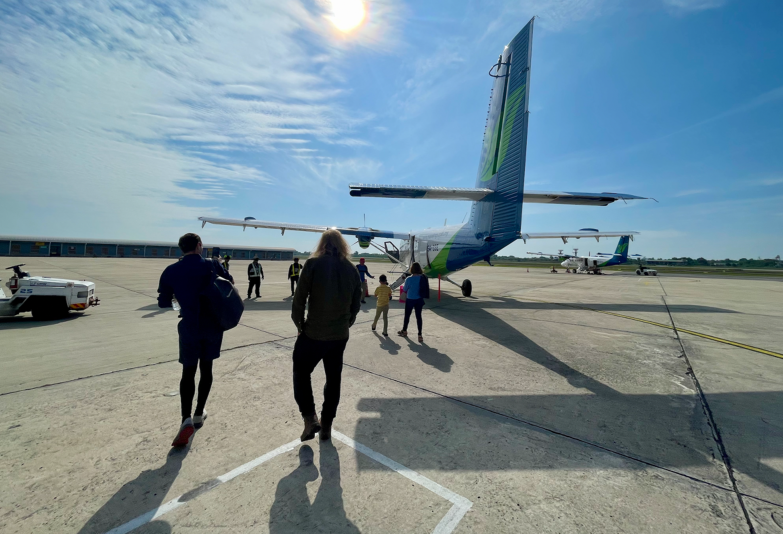
To reach Long Semadoh, most would need to first board a 20-seater propeller plane from either Miri or Kota Kinabalu, nearest cities in the region in order to reach its nearest town – Lawas.
Long Semadoh sits at 3,000ft above sea level in rural Lawas, Sarawak, accessible only by a four- to five-hour 4WD ride along logging trails. That is if one was willing to get on a 20-seater propeller plane to reach the nearest town, Lawas. Hidden amongst the mountainous region or North Borneo lay this rice-farming village of the Lun Bawang tribe. Described as rice connoisseurs and the most welcoming people, the valley hides many gems that only those who would brave the journey could discover.
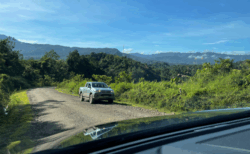
Those who have braced the first flight journey would now need to embark on a 4 to 5-hour logging trail journey up the mountains into the interior of Lawas. Drivers of these 4X4 vehicles are predominantly community members, many rely on transporting patrons and goods for their livelihood.
Free, Prior and Informed Consent
Before the work was scoped, the community’s leaders in Long Semadoh were formally written to. The Penghulu and the Ketua Kampung of each constituent village were notified and requested to review and provide consent for the engagement. Through the consultation, our visit dates were aligned around local commitments, and accommodation arrangements were directed to local providers. The scope of the actual work itself was also left to be negotiable. From an indigenous-rights frame, this aligns with the local principles of Free, Prior and Informed Consent (FPIC), which is the community’s requirement for any engagement. From a co-designing frame, this is also the first piece of the branding co-development process.
Co-designing the Brief: from product brands to a village brand
The grant had originally aimed only at conducting capacity-building training for individual micro-enterprises, with a focus on rebranding their respective products. This included the famous Lun Bawang heirloom rice, local homestays, packaged food products, and eco-touristic services. After multiple rounds of dialogue with the community leaders and micro-entrepreneurs, our brief emerged into a branding campaign for the entire Long Semadoh village. The turn from individual rebranding to a village-wide one was due to Long Semadoh’s existing geographical challenges, which meant that improving any individual branding without addressing the broader challenge of brand and market accessibility would dissipate marketing efforts and limit the real gains for each enterprise.
In addition, this approach also aligns well with local values. Much of the Lun Bawang social life at Long Semadoh is organised around shared stewardship: church, harvest, and hosting are collective acts. A brand that asked entrepreneurs to compete with one another for visibility would have run counter to how things work locally.
We eventually arrived at a place-based identity– Long Semadoh, while each enterprise would be rebranded as a sub-brand. The rice producer, the homestay, and the chilli producer remain operationally distinct but are visibly part of the same brand, marketing channel, and demand funnel.
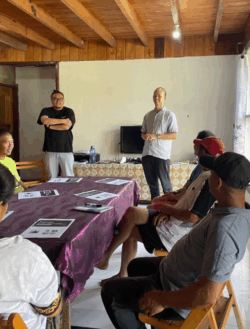
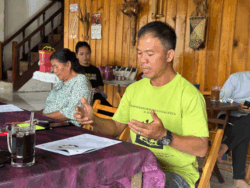
Local community engaging in the capacity-building workshop. 10 micro-entrepreneurs attended, representing a diverse range in age, gender and types of enterprise. Branding and digital marketing were taught through practical concepts and exercises that local communities can replicate post-workshops.
Capacity-Building Workshops: Branding and Digital Marketing
Leveraging the combined expertise with the Culture Capital, a creative agency engaged for the project, we conducted a capacity-building workshop on branding and digital marketing. Ten micro-entrepreneurs from the valley were pre-selected to attend, with their individual product as focal points of discussion and rebranding. The sessions were delivered in Malay, with packaging and branding samples brought from the UK and Malaysia as comparators. We worked through branding, content creation, and social-first thinking against artefacts that the participants could physically interact with and critique.
Having The Culture Capital as our partner made a key difference. They specialise in working with indigenous communities, with an equally invested support for indigenous enterprises in Sarawak. Generously, they have committed to a seven-month post-fieldwork engagement, which consists of producing video and social content, and in stewarding the branding campaign before handing it over to the community.
Co-creating the logic of ‘Don’t come to Long Semadoh’
By the end of the workshop, the entrepreneurs had co-created a village-level marketing brief with us. The brief defined what should and should not be shared about Long Semadoh, and how the village should be represented to outsiders. Iterated from these conversations was the tagline — “Don’t come to Long Semadoh”. The tagline intentionally has no call to action, nor any seamless accompanying booking system. All it has is a sentence designed to do the opposite of what many tourism marketing typically do – don’t come unless you really want to.
Equipped with a range of eco-touristic packages amid multiple available but rarely occupied homestays, the community in Long Semadoh does want more visitors. However, they do not want any visitors, nor do they want them all at once. The marketing tagline that tells people ‘not to come’ is both an attempt at anti-marketing, a marketing approach that aims to trigger reactionary curiosity through unconventional marketing, while also being honest translation of local preferences and needs.
From a marketing perspective, it creates a contradiction that aims to create a scroll-stop amidst a saturated attention economy. A touristic venue that tells you not to come prompts the reader to ask ‘why not?’, creating engagement that goes beyond generic awareness.
Simultaneously, the valley, along with its existing infrastructure and capabilities, can only accommodate a particular size and type of visitor. Loud generalist tourism marketing would attract the wrong audience and at an unsustainable volume. The tagline, hence, acts also as a filter for a psycho-demographic that would seek out what Long Semadoh actually offers, naturally leading to a more manageable visitor volume that meets the capacity of local tourism capabilities.
Creating Marketing Digital Assets for the community
Upon agreeing on the creative direction and marketing messaging, the team focused the remaining 3 days on creating high-quality digital assets that the local community could use for the branding exercise. This consists of videography, photography and conducting community interviews that could be documented for future social media and marketing campaigns.
Local champions guided the process of content creation, directing access to community members and shooting sites, while advising on preferred visual messaging. The team relied on collaborating with the community in understanding what is appropriate for publicity within the village and what is not, while constantly sense-checking contemporary marketing ideas and insights with the local communities, ensuring the creation process is as co-developed as possible.
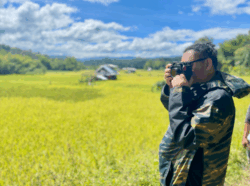
Poh, the Creative Director from The Culture Capital in action – producing promotional assets co-owned with the community for future marketing and publicity.
Project outputs and plans
Following the fieldwork conducted in Long Semadoh in December 2025, the project team worked on co-designing a series of branding assets for the community – including the ‘Semaduh Valley’ brand logo, social media accounts (Instagram and Facebook), and a range of product branding assets for the various enterprises in Long Semadoh.

The co-designed brand logo for Long Smeaduh– “The best kept secret – Semaduh Valley”
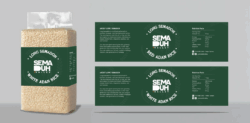
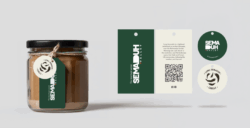
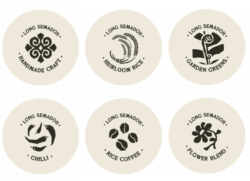
Product packaging of local products, branded with the ‘Semaduh Valley’ brand, with a consistent logo and product description, alongside a QR code that links to social accounts for continual brand engagement.
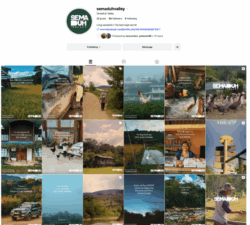
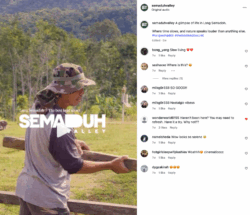
Instagram profile created for ‘Semaduh Valley’, which is manageable by the local community without requiring advanced website maintenance skills.
Reflection on Digital Marketing and Community Impact
A great deal of what digital marketing has become is oriented towards growth and optimisation. This means maximising campaign reach, improving conversion of leads, and scaling operations to increase sales revenue. Although these logics are deemed fundamental to conventional marketing, this project taught me that they are not always universal.
In contexts like Long Semadoh, success is not necessarily measured through clicks and likes or how many sales are converted through a campaign. These metrics are important nonetheless, but communities often seek returns beyond the monetary and the transactional. Success seemed to me in reflection, more like whether a community engagement impact project as this converts from a mere project to sustained friendship; whether the digital visibility of a community translates into greater recognition of the local culture and way of life, rather than mere tourism income; and whether the capacity-building efforts meaningfully provide communities with the skills they need to achieve what they deem worthy of achieving.
What I take from this project into my wider work of digital marketing, subsistence communities, and digital inclusion is a practical position of grounding my inquiry in local perspectives. To prevent taking a purely outsider stance on what problems are worth investigating, what solutions are appropriate, and how impact is to be defined and experienced. It has given me both the immersive experience and conviction to continue the challenging yet vital work of prioritising community voices and aspirations in community-impact efforts and projects.

The impact project also concluded with a series of research dissemination talks across South-East Asia and the UK. The motivation of these events was to encourage the reimagining of community-based research among marginalised communities beyond a deficit framing, while also seeking potential collaboration beyond the PhD.
Too often, research and impact-related work that reaches out to marginalised communities, particularly within a technological context, views them as ‘lacking’ or ‘in need’ of interventions. Rarely would peripheral communities be viewed as co-creators of knowledge and innovation that could benefit not only the immediate stakeholders but also contribute to knowledge and research. By demonstrating through our work co-designing digital marketplace platforms with rural Sarawakians, I illustrate how technology can be re-examined through local perspectives, practices, and in-situ engagement, offering new ways of viewing our relationship with technology.
Guest Talk at Caraga State University (November 2025)
The first dissemination event was a guest talk at Caraga State University (CSU) in the Philippines. Awarded the No. 1 university in the Philippines for advancing Sustainable Development Goal 1 (SDG1) of No Poverty, CSU was a suitable avenue to discuss the work on digital inclusion among rural and marginalised communities.
Hosted by the Dean of the College of Computing and Information Sciences, Dr. Jaymer Jayoma, and supported by the Vice President for Academic Affairs, Dr. Vicente A. Pitogo, the talk ended with a dialogue session with the college academics and researchers on suitable research methods for community co-design, such as ethnography and participatory design.
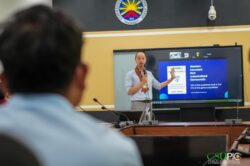
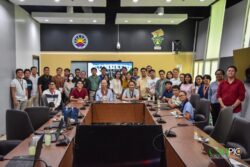
Giving a guest talk at Caraga State University, the Philippines in November 2025.
Since this engagement, I have continued collaborating with Dr Vicente on a white paper focused on Universities’ role in advancing AI for Good, which will include a conference on the same topic to be held at the University of Nottingham in August 2026.
Guest Lecture at University Technology Sarawak (December 2025)
The second dissemination event was a guest lecture at the University Technology Sarawak (UTS). Hosted by Dr Shaista Falak, I delivered an interactive lecture on digital inclusion and Sarawak’s digital entrepreneurship ecosystem to an undergraduate cohort. Returning to UTS to present the findings of this research was particularly meaningful, as it was here that I first conducted my placement as a visiting fellow in 2023, as part of an international exchange for my PhD. As part of the visit, I also had the opportunity to return to a few local villages to speak to participants and collaborators of my PhD research.
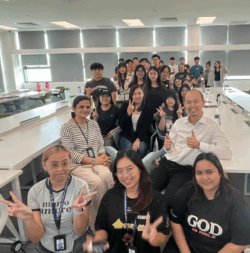
Guest lecture with undergraduate students at the University Technology Sarawak, Malaysia in December 2025.
Since the placement in 2023, supported by the Horizon CDT, I have facilitated a partnership between both institutions through the signing of a Memorandum of Understanding (MoU), collaborated in journal and conference publication with Professor Tariq Zaman and Dr Gary Loh from the university, and has been invited to contribute to their local journal, the Borneo Journal of Social Sciences and Humanities, scheduled for publication this summer.
Guest Lecture with University Teknologi Brunei (April 2026)
Due to scheduling constraints, the third dissemination event was held at Universiti Teknologi Brunei and conducted virtually with academics and researchers from the university. Hosted by Dr Sharina Yunus, I presented the research work conducted in Borneo, where Brunei is also geographically located, to inform the possibility of similar work being conducted in collaboration with researchers from Brunei in the future.
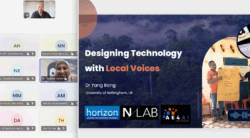
Guest lecture with the University Technologi Brunei over Microsoft Teams.
Public Engagement with Residents of Nottingham – Code-RED (June 2026)
Finally, the research work has also been disseminated back in Nottingham through the Co-Designing Responsible Digital Futures project, or Code-RED.
Organised as a public engagement with local residents of Nottingham, I had the opportunity to present the research work done at the university in encouraging both citizen participation in research and also in consolidating a co-design on how digital future research should be directed at the university.
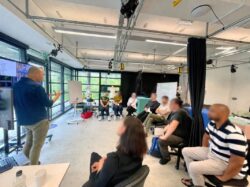
Photos of the 3-min flash talk on my research, followed by an extended discussion with the public on how digital future research should be directed.
Acknowledgements
I am deeply grateful to have been awarded the Horizon Large Impact grant, which has enabled the host of impact activities reported in this blog post. The funding has allowed me to extend the impact of my PhD research back to the communities that supported it, facilitated crucial local networking and connections that would allow collaboration and partnerships to continue post-impact activities, and also allowed the important work of digital inclusion and participatory research to extend beyond my individual research agenda. Beyond these, I have benefited tremendously from the experience not only in the planning and management of impact projects, but also in furthering my intellectual and reflexive inquiry of the research field. To that, I would like to rearticulate my gratitude to the Horizon CDT team for their sustained support and encouragement. Thank you.